
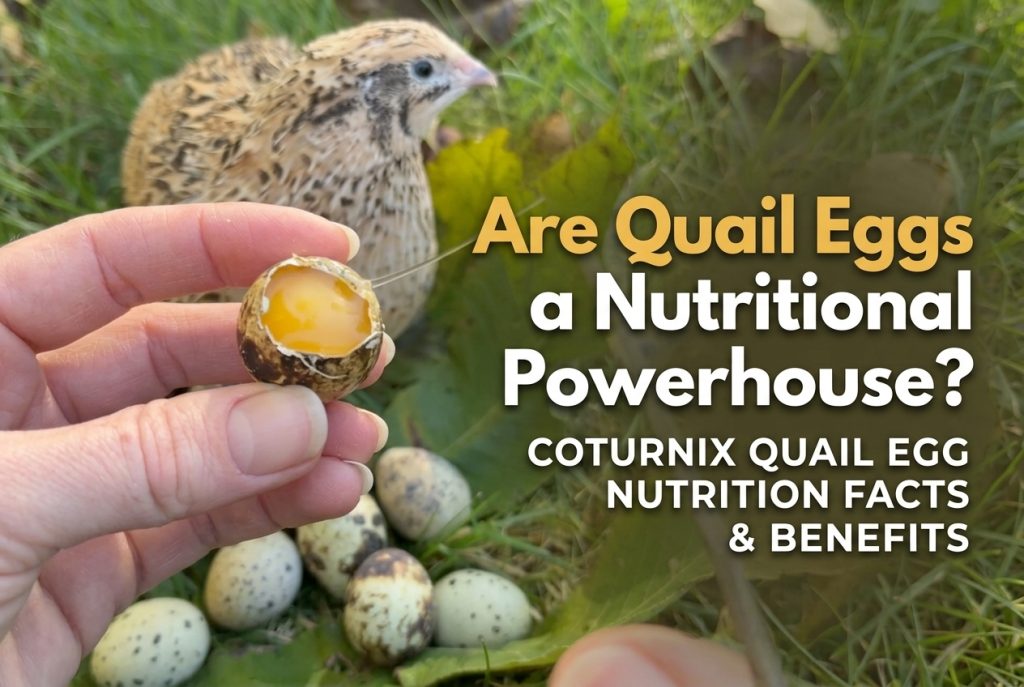
Coturnix quail eggs may be small weighing roughly 9–10 grams each, but gram-for-gram, they are far more nutrient-dense than standard chicken eggs. Eating 5 Coturnix quail eggs is the nutritional equivalent of eating one extra-large chicken egg.
Coturnix Quail Egg Nutrition Facts
Don’t let their size fool you. Weighing in at roughly 9 to 10 grams each, quail eggs require a little bit of counting, but the math is well worth it. Eating 5 whole Coturnix quail eggs roughly equals the weight and volume of one extra-large chicken egg—but with a vastly superior nutrient density.
Core Nutritional Profile
(Per 5 whole quail eggs / approx. 50g)
| Nutrient | Amount | % Daily Value (DV)* |
| Calories | 79 kcal | 4% |
| Protein | 6.5 g | 13% |
| Total Fat | 5.5 g | 7% |
| Saturated Fat | 1.8 g | 9% |
| Carbohydrates | 0.2 g | 0% |
| Cholesterol | 422 mg | 140% |
*Percent Daily Values are based on a 2,000 calorie diet.
The Micronutrient Breakdown: Why Quail Eggs Shine
Beyond basic macros, quail eggs are an absolute treasure trove of essential vitamins and minerals. Here is what is hiding inside those pretty speckled shells:
- Choline (132 mg | 24% DV): This is a standout nutrient for brain development, memory function, liver health, and cellular signaling. Quail egg yolks are exceptionally rich in lecithin-bound choline, supporting sharp cognitive function and nervous system integrity.
- Riboflavin / Vitamin B2 (0.4 mg | 30% DV): Delivering significantly more B2 per gram than chicken eggs, this vitamin acts as a vital coenzyme for cellular energy production and metabolic health.
- Vitamin B12 (0.8 mcg | 33% DV): Essential for nerve sheath maintenance, red blood cell formation, and DNA synthesis.
- Vitamin A (270 IU | 10% DV): Packed with fat-soluble vitamin A and carotenoids (like lutein and zeaxanthin) to support sharp vision and robust immune barriers.
- Selenium (16 mcg | 29% DV): A powerful trace mineral and antioxidant that neutralizes cellular oxidative stress and supports thyroid function.
- Iron (1.8 mg | 10% DV): Features bioavailable heme iron, supporting hemoglobin production and oxygen transport to stave off fatigue.
- Phosphorus (113 mg | 16% DV): Works alongside calcium to build bone mineral density and produce ATP (cellular energy).
Unique Biological & Culinary Benefits
What makes Coturnix quail eggs biochemically unique compared to standard poultry options?
- The Superior Yolk-to-White Ratio: Quail eggs feature a much higher yolk proportion (around 40% of total mass) compared to chicken eggs (around 30%). Because vitamins, healthy fats, and choline are concentrated in the yolk, every bite delivers a denser payload of micronutrients.
- Rich in Ovomucoid Proteins: Quail egg whites contain elevated levels of natural ovomucoid proteins (trypsin inhibitors), which have historically been studied for their unique anti-allergic properties and resistance to histamine triggers.
- Healthy Fatty Acid Profile: They are rich in monounsaturated and polyunsaturated fats, which not only support heart health but also aid in the optimal absorption of fat-soluble vitamins (A, D, E, and K).
Why Poultry Keepers Love Raising Coturnix Quail
If you’re a backyard bird enthusiast on the fence about adding quail to your setup, the nutritional perks are just the beginning. Coturnix quail are a favorite among homesteaders for several practical reasons:
- Incredible Feed-to-Egg Ratio: They mature at lightning speed—often starting to lay eggs at just 6 to 8 weeks of age.
- Minimal Space Requirements: You can comfortably house a small breeding flock in a compact hutch or mobile coop, making them ideal for urban and suburban homesteads where zoning restricts large chicken flocks.
- Quiet Demeanor: Unlike roosters, male quail (cockerels) are relatively quiet, making them much more neighbor-friendly.
The Verdict
Whether you collect them fresh from your own backyard aviary or pick them up at a local farmers market, Coturnix quail eggs are a simple, nutrient-dense upgrade to your daily diet. Toss them into a morning salad, pickle them for a protein-packed snack, or fry a dozen up for a gorgeous appetizer—your brain, cells, and taste buds will thank you!
https://www.youtube.com/shorts/e3WVMGm3tMM