
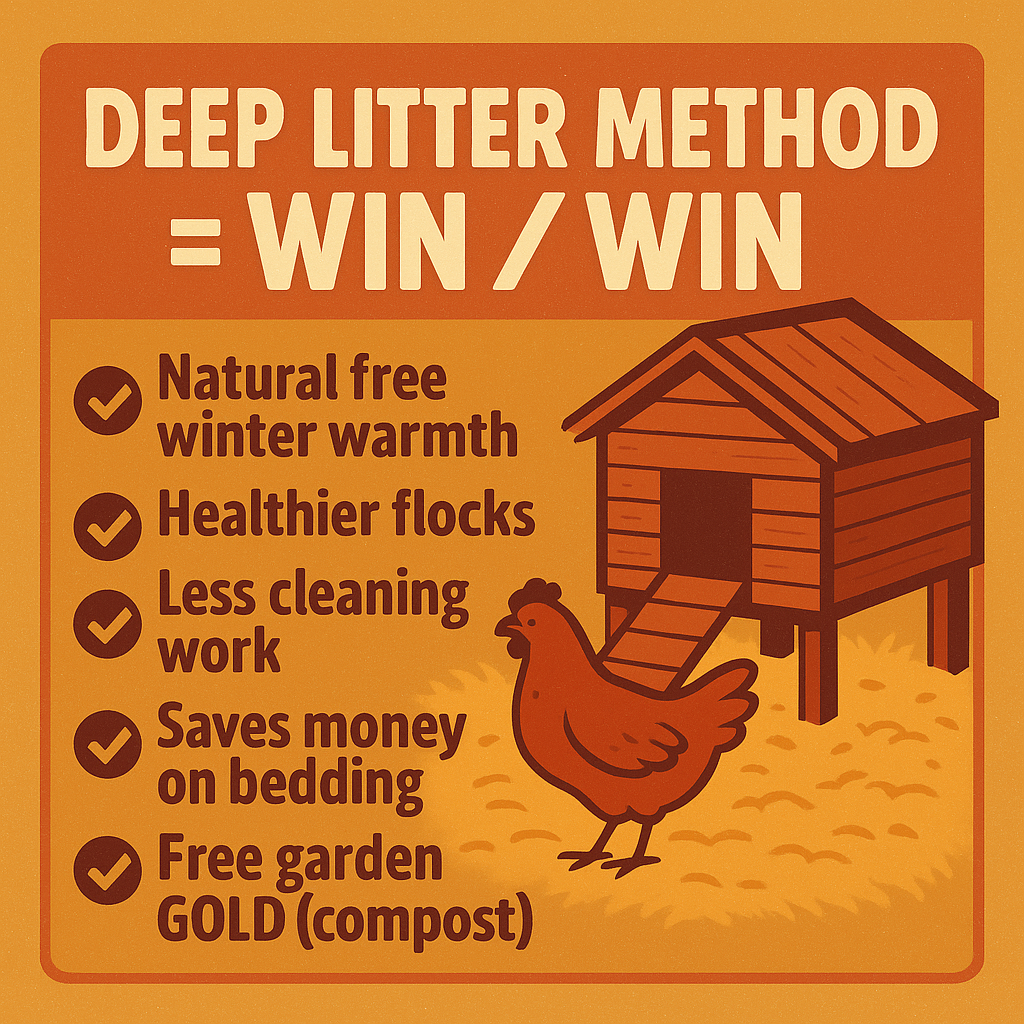
The Deep Litter Method: A Guide to a Healthier, Self-Composting Chicken Coop
For backyard poultry enthusiasts, the chore of cleaning the coop is often the least glamorous part of the job, but there was a method that not only reduced your cleaning workload while also created a healthier environment for your flock, provided them with endless entertainment, and produced rich compost for your garden! Enter the Deep Litter Method (DLM).
This isn’t just a way to manage coop waste; it’s a holistic, natural system that mimics the forest floor, turning your coop into a giant, in-situ composting bin. Here’s everything you need to know to successfully implement the Deep Litter Method.
What Exactly is the Deep Litter Method?
The Deep Litter Method is a sustainable coop management system where carbon-rich bedding materials are allowed to accumulate in the coop, mixed with the chickens’ manure. Instead of frequently removing the soiled bedding, you periodically add a fresh layer of new bedding on top.
The magic happens as the chickens naturally scratch, peck, and turn the bedding. This action, combined with the work of beneficial microbes and fungi, begins an aerobic (oxygen-using) composting process directly on the coop floor. The result is a deep, friable, and surprisingly low-odor bedding that breaks down the manure and neutralizes pathogens.
The Multifaceted Benefits: Why You Should Consider It
The DLM is more than just a lazy person’s way to clean a coop; it offers a host of proven benefits:
- Improved Chicken Health:
- Warmer in Winter: The composting process generates heat, providing a natural source of warmth for your flock during cold months.
- Healthier Respiratory Systems: A properly managed deep litter system is dry and friable, reducing harmful ammonia fumes that can damage chickens’ delicate respiratory tracts.
- Natural Probiotics: The thriving microbial ecosystem introduces beneficial bacteria to the chickens’ environment, which can crowd out harmful pathogens and boost their immune systems.
- Reduced Parasites: Chickens constantly scratching through the litter helps disrupt the life cycles of mites and lice.
- Less Work for You:
- No Weekly Clean-Outs: Instead of the labor-intensive task of shoveling out soiled bedding every week, you simply add fresh bedding as needed. A full clean-out is typically only necessary once or twice a year.
- Enriched Environment for the Flock:
- The deep litter becomes a “scratch mat,” providing hours of entertainment as chickens forage for spilled seeds, bugs, and the tasty microbes that grow within. This is a powerful form of environmental enrichment that reduces boredom and associated vices like feather pecking.
- Fantastic Garden Compost:
- After several months, the finished product at the very bottom of the litter is a partially composted, nitrogen-rich material that is perfect for your garden. After a final hot compost cycle outside the coop, it becomes a phenomenal soil amendment.
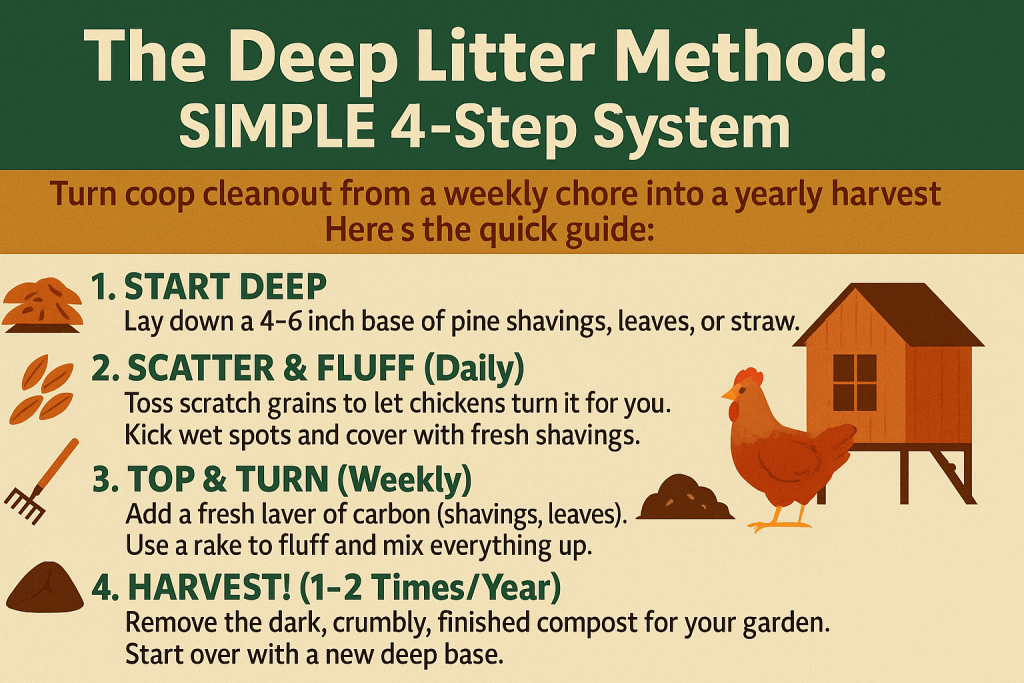
How to Start and Maintain a Deep Litter System
Success with the Deep Litter Method hinges on a simple mantra: Manage Moisture and Maintain Fluffiness.
Step 1: Choose Your Carbon Base
The foundation of your litter is a high-carbon, absorbent material. Excellent choices include:
- Dried Leaves: A fantastic, free resource. Shred them first to prevent matting.
- Pine Shavings: The gold standard. They are highly absorbent, low-dust, and resist packing down.
- Straw: A good option, but it can mat down more easily than shavings and may contain mold spores.
- Rice Hulls or Hemp Bedding: Also excellent, though availability and cost may vary.
Avoid: Cedar shavings (the aromatic oils can be harmful to poultry), sawdust (it’s too fine, creates dust, and packs down easily), and hay (which is full of seeds and molds quickly).
Here’s a quick video on the Deep Litter Method of In-Coop Composting:
Step 2: Initial Setup
Start with a clean, dry coop floor. Apply a base layer of your chosen carbon material 4 to 6 inches deep. This provides enough mass to start the composting process and absorb moisture effectively.
Here’s a comprehensive guide to cleaning out and setting-up your coop to prepare for winter:
Step 3: The Daily & Weekly Routine – This is the Key!
- Scatter Treats: Every day or two, scatter a handful of scratch grains, whole corn, or dried soldier fly larvae onto the litter. This encourages your chickens to vigorously scratch and turn the bedding, incorporating oxygen—the critical ingredient for aerobic composting.
- Fluff and Turn: Use a lightweight rake or a garden fork to gently turn over the top layer of the litter every few days, especially in areas the chickens don’t frequent as much. This prevents compaction and keeps the process aerobic.
- Monitor Moisture and Odor: The litter should always feel like a “wrung-out sponge,” damp but not wet. If you notice a strong ammonia smell or see damp, clumpy spots, it’s a sign you need more carbon.
- Add More Bedding: As the litter gets compacted or the moisture level rises, add a fresh, thin layer (1-2 inches) of your dry carbon material. This soaks up excess moisture and restores a dry, fluffy surface.
Troubleshooting Common Problems
- Ammonia Smell: This is the #1 sign of trouble. It means the litter is too wet and has become anaerobic. The solution is immediate action: add a generous amount of fresh, dry bedding and turn the entire litter pile thoroughly to incorporate oxygen.
- Flies: A healthy, aerobic compost pile should not attract significant flies. If flies are a problem, the litter is likely too wet or has fresh manure sitting on the surface. Bury fresh manure by turning the litter, add more carbon, and ensure good coop ventilation.
- The Litter is Too Wet: Identify the source. Is the waterer leaking? Is the roof leaking? Is the coop poorly ventilated? Fix the source, then add a large amount of dry carbon material to absorb the existing moisture.
- Mold: This usually occurs if the bedding is packed down and wet. Break up moldy clumps, remove them if possible, and add dry bedding. Improve ventilation and fluff more frequently.
- Odors: Natural products like GrubTerra Coop Refresher can be used to prevent and control odors and moisture. Use code MARY20 to save 20% on all orders. (This is an affiliate link that will save you 20% on any order at GrubTerra at no cost to you and will earn a small commission).
When and How to Do a Full Clean-Out
With proper maintenance, you may only need to do a full clean-out once or twice a year, typically in the spring and/or fall.
You’ll know it’s time when:
- The litter is no longer absorbing moisture effectively.
- The volume has built up significantly, reducing headroom in the coop.
- You’re simply ready to start a fresh cycle.
The clean-out is straightforward. Using a shovel and a wheelbarrow, remove all the litter from the coop. What you’ll find is a dark, crumbly, earthy-smelling material at the bottom—this is the “black gold” that has been composting for months.
Important: This in-coop compost is not yet ready for direct use on plants. It is very “hot” (high in nitrogen) and needs to finish composting in a pile outside for another 2-6 months before being added to your garden.
The Science in a Nutshell
The Deep Litter Method works by harnessing natural biological processes. The carbon-rich bedding (the “browns”) balances the nitrogen-rich manure (the “greens”). The chickens provide the aeration, and moisture is managed to favor aerobic bacteria. These microbes break down the waste, generating heat and converting it into stable humus and carbon dioxide. This process effectively “consumes” the manure, drastically reducing odor and pathogen levels.
Final Verdict
The Deep Litter Method is a win-win-win for the chicken keeper, the flock, and the garden. It transforms a daily chore into a low-maintenance, symbiotic system. By embracing this method, you’re not just managing waste; you’re creating a vibrant, self-sustaining ecosystem right in your coop. Give it a try—your back, your chickens, and your garden will thank you! ❤️
Please read Composting Chicken Waste at https://difer.org/guide-to-composting-chicken-waste/ for more information on composting with Poultry
DIFER.ORG is dedicated to reducing waste
Do Different



The deep litter method of composting is by far the best method of winterizing your coop. It’s so easy and smells better! The only downside is that I have found is other animals like to nest in it too! Do you have any advice to keep mice out in the winter?
That’s a great point! You’re absolutely right; the deep litter method is fantastic for warmth, composting, and odor control. The downside of attracting extra “guests” like mice is a common winter challenge.
A few strategies to deter mice without harming your flock:
Fortify the fortress: This is the most effective method. Mice can squeeze through holes the size of a dime. Before winter sets in, do a meticulous coop audit. Use 1/4 inch hardware cloth (not chicken wire) to seal any gaps, vents (cover from the inside), and cracks around doors, windows, and foundations. Pay special attention to where roosting bars meet walls.
Disrupt the buffet: Store all chicken feed in metal, airtight containers. Use feeders that don’t allow spillage, and consider picking the feeder up at night. Mice are primarily there for the easy food.
Strategic litter management: While you don’t want to turn it too much in winter (to preserve heat), occasionally fluffing the top layer with a rake when adding new bedding can disturb nesting attempts. Some folks add a sprinkle of food-grade diatomaceous earth (DE) or dry, sandy soil to the top layer to make it less inviting for burrowing (ensure it’s dry and wear a mask when applying). Avoid using straw, as mice love to tunnel in it; shredded pine or aspen shavings are less cozy for them.
Employ a predator patrol: A well-secured coop with a snug tight-fitting pop door that you close at dusk will keep mice out but also protect your chickens from larger predators. Consider installing an automatic door for consistency.
Old-school traps: As a last resort inside the coop, snap traps placed in tunnel-style bait stations (like behind nest boxes or along walls) can be effective. Use a tempting bait like peanut butter. Avoid rodenticides entirely, as they can poison chickens, pets, and wildlife that might eat a compromised mouse.
The key is making the coop less accessible and less rewarding than the effort it takes for a mouse to get in. Good luck, and enjoy that fantastic compost come spring!
The deep litter method is the best way to keep chickens and poultry comfortable in the winter. Simple, easy, warm, clean, and safe. No need for dangerous heaters in a coop. Just use a lot of extra bedding. Tried and true